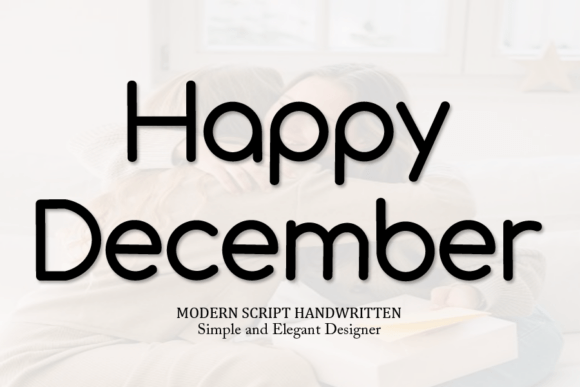
Happy December: A Font That Brings Joyful Energy to Your Designs
There’s something special about a font that feels like it was written with a smile. Happy December captures that exact energy—a playful, handwritten script that doesn’t take itself too seriously while still delivering polished, professional results. Whether you’re designing a logo for a cozy café, creating social media posts for a lifestyle brand, or putting together invitations for a holiday event, this typeface brings warmth and personality that feels genuinely human. It’s the kind of font that makes people pause mid-scroll, not because it’s loud or aggressive, but because it feels approachable and real.
A Handwritten Style That Actually Works in Professional Contexts
Many handwritten fonts struggle with a common problem: they look beautiful in isolation but fall apart when applied to real projects. They’re either too messy for business use or so overly polished that they lose the handcrafted charm that made them appealing in the first place. Happy December threads that needle skillfully. The letterforms have a natural, free-flowing quality—slightly irregular baselines, organic stroke variations, and the kind of casual rhythm you’d see in someone’s actual handwriting. Yet the overall consistency holds up across different sizes and applications, which is critical when you need a font to perform reliably across a website header, a product label, and a printed brochure.
What makes this particular script font stand out among other creative fonts is its versatility in tone. It can read as whimsical and fun for a children’s brand, but it also carries enough sophistication to work in editorial layouts or boutique packaging. The key lies in how you pair it and what context you place it in. Set it against a clean sans serif font for body text, and suddenly your headline has character without sacrificing readability. Use it alone for short phrases on merchandise or social graphics, and it becomes an instant focal point.
Where This Typeface Truly Shines
Think about the brands and projects that resonate with audiences today. They tend to feel personal, human, and slightly imperfect in the best possible way. That’s exactly the visual language Happy December speaks fluently. Here are some real-world scenarios where this font can make a meaningful difference:
- Logo design and brand identity: For businesses that want to convey friendliness—think bakeries, florists, boutique shops, personal coaches, or handmade goods sellers—a handwritten script logo immediately sets a welcoming tone. Happy December works beautifully as a primary wordmark or as a complementary element alongside a more structured typeface.
- Packaging design: Consumers are drawn to products that feel artisanal and thoughtfully made. Using this font on labels, boxes, or tags adds that handcrafted touch without looking amateurish. It pairs especially well with minimalist layouts where the typography does the heavy lifting.
- Social media graphics: Instagram stories, Pinterest pins, and Facebook posts all benefit from typefaces that stop the scroll. A display font like Happy December gives your quotes, announcements, and promotional graphics a distinctive voice that stands apart from the sea of generic sans serif text.
- Website headers and blogs: While you wouldn’t set an entire blog post in a script font, using it strategically for section headers, pull quotes, or hero text on a landing page adds visual interest and guides the reader’s eye through your content.
- Print materials and invitations: Wedding invitations, event flyers, greeting cards, and menu designs all benefit from a typeface that feels celebratory and warm. The free-spirited style of this font makes it particularly suited to seasonal campaigns, holiday promotions, and personal correspondence.
- Merchandise and apparel: Tote bags, mugs, t-shirts, and stickers featuring hand-lettered typography have massive appeal. This font gives you that hand-lettered look without needing custom illustration for every piece.
Pairing Happy December with Other Fonts
No font exists in isolation, and understanding how to build effective font pairings is one of the most practical skills any designer or content creator can develop. Because Happy December is a display font with strong personality, it works best when balanced with something more restrained. A clean sans serif font like Montserrat, Poppins, or Open Sans provides excellent contrast for body copy and supporting text. If your project calls for more traditional elegance, pairing it with a classic serif font like Playfair Display or Lora creates a sophisticated interplay between formal and casual.
The general principle is straightforward: let the script font own the headlines and focal points, then give your audience’s eyes a rest with simpler typography for longer passages. This approach also improves readability significantly. Handwritten fonts are wonderful for impact and emotion, but they can become tiring to read in large blocks. By reserving Happy December for strategic moments, you maximize its visual appeal while keeping your overall design functional and accessible.
When testing font combinations, create sample layouts at actual size before committing. What looks balanced on a large monitor might feel cramped on a mobile screen, and what reads clearly at 72 pixels might blur together at 18 pixels. Print a test page if your project involves physical materials. These small steps save enormous amounts of revision time later.
Licensing, File Formats, and Practical Considerations
Before integrating any premium font into a commercial project, always verify the licensing terms. Most quality font packages include clear documentation about what’s permitted—whether that covers web use, print production, app embedding, or merchandise sales. Happy December, as a commercial font, typically comes with licensing that supports a wide range of creative applications, but it’s worth confirming the specifics match your intended use, especially if you’re designing for clients or producing items for sale.
Check what file formats are included. A well-prepared font package usually provides OTF and TTF files at minimum, with web font formats like WOFF and WOF2 for online projects. Some packages also include multilingual support, alternate characters, or stylistic variations that expand your creative options. Take time to explore the full character set—you might discover ligatures, swashes, or alternate letterforms that add even more personality to your work.
Building Visual Consistency Across Your Brand
One of the most overlooked benefits of choosing the right typeface early in a branding process is the consistency it creates over time. When your audience sees the same visual language across your website, social channels, packaging, and marketing materials, recognition builds naturally. Happy December can serve as a signature element of your brand identity—a visual shorthand that communicates your personality before anyone reads a single word of copy.
This doesn’t mean every piece of content should feature the font prominently. Smart brand systems use typography hierarchically. Your primary script font might appear in your logo and major campaign headlines, while supporting typefaces handle day-to-day content. The goal is a cohesive visual system where every element feels like it belongs to the same family, even when individual pieces vary in format and purpose.
For small business owners and entrepreneurs building a brand from scratch, investing in a few quality design assets—starting with a strong typeface—is one of the highest-leverage decisions you can make. It shapes how customers perceive your business before they ever interact with your product or service. A font like Happy December signals creativity, warmth, and approachability, which can be exactly the positioning that helps a new brand carve out its space in a crowded market.
The best typography decisions aren’t about following trends or picking the most popular option. They’re about finding a typeface that genuinely represents your voice and then using it thoughtfully across everything you create. When the font feels right, your audience feels it too—and that emotional connection is where real brand loyalty begins.