Luxury: Weaving Ancient Craft into Modern Type
There is a specific visual weight that comes with true craftsmanship, a certain gravity that stops the eye and demands a closer look. It isn't always about the loudest color or the most aggressive layout; sometimes, it is found in the quiet precision of a single letterform. If you have ever found yourself captivated by the dense, interwoven patterns of a medieval manuscript or the intricate metalwork of ancient jewelry, you understand this pull. It is the allure of complexity, the kind that suggests a story has been carefully etched into the very surface of an object. In the world of typography, few styles capture this blend of history and high-impact visual storytelling quite like the Luxury typeface. It is a premium display font that does more than simply spell out words; it wraps them in a tapestry of visual history, offering a bridge between the mystical past and the sharp, clean demands of contemporary graphic design.
The Art of the Insular Knot
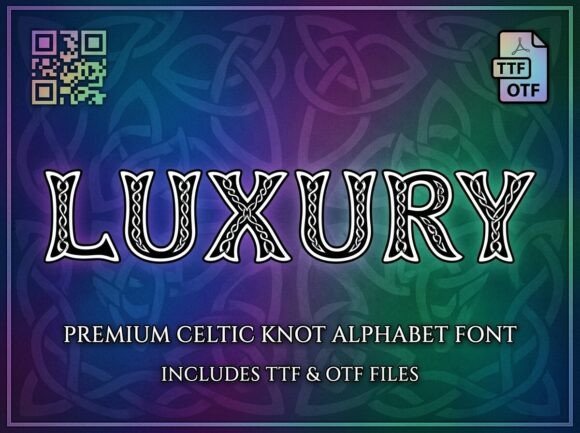
To appreciate Luxury, one must first look to its roots. The typeface draws heavy inspiration from the art of traditional Insular illumination, a style perfected by monks in the British Isles during the early Middle Ages. Think of the legendary Book of Kells, where every page is a riot of color and geometry. Luxury translates this ancient art form into a digital format without losing its soul. The characters are tall and blocky, designed to hold space with authority, but their true beauty lies in the details. The letters are defined by flared corner terminals and crisp white contour outlines that act as a frame, separating the text from the background with a clean, architectural precision.
However, the defining feature is the internal architecture of the letters. The "soul" of the typeface is woven with an intricate, seamless black Celtic knotwork braid. These are not merely decorative additions; they are structural elements that interlock and weave through the letterforms, creating a high-contrast graphic effect. It is a bold interpretation of tribal ribbons and ancient weaving, rendered in a way that feels surprisingly modern. The result is a typeface that carries the prestige of a historical artifact but wears it with the confidence of a contemporary design asset. For designers looking to inject a sense of established craftsmanship into their work, this level of detail is a game-changer.
High-Impact Applications for Modern Brands
Because Luxury is a display font, it is not intended for body text or lengthy paragraphs. Its intricate internal details would become muddled at small sizes. Instead, it shines brightest when used as a focal point—where typography is treated as illustration. This makes it an incredibly versatile tool for specific branding challenges.
Consider the artisanal market. For craft breweries, distilleries, or wineries, the font immediately communicates a "small batch" aesthetic. It suggests that the product inside the bottle is as carefully curated as the knotwork on the label. When applied to packaging design, Luxury creates an instant shelf presence that feels premium and hand-crafted, distinguishing a product from the sterile, sans-serif labels of mass-market competitors.
The gaming and entertainment industries also find a natural ally in this typeface. Fantasy video game titles, movie posters for historical dramas, or promotional materials for cultural festivals benefit from the font’s mythological prestige. It sets the stage for a narrative before the audience even reads the synopsis. Similarly, for modern heritage apparel brands—think high-quality denim, leather goods, or outdoor gear—Luxury offers a way to align a new brand with the timeless durability of the past. It bridges the gap between rugged history and modern streetwear, offering a logo that feels both ancient and relevant.
Strategic Integration: From Logos to Social Media
Successfully integrating a heavy, ornamental font like Luxury into your visual identity requires a strategic approach to typography. It is a powerful tool, but like any powerful tool, it must be handled with care to ensure readability and professional presentation.
Logo Design and Wordmarks: Luxury is an exceptional choice for a primary wordmark. Because the letters are so visually dense, they create a solid, monolithic block of text that anchors a logo. However, because the internal patterns are complex, scaling is critical. You must ensure that the knotwork remains legible at the smallest intended size, whether that is a favicon on a browser tab or an embroidery on a shirt pocket. A good practice is to test the logo in black and white first; the high-contrast nature of Luxury ensures it holds up well without color, which is a hallmark of strong logo design.
Digital Presence and Web Design: On a website, Luxury should be reserved for hero sections, headers, and pull quotes. It acts as a visual hook. Pairing it with a clean, geometric sans-serif font for your body text is essential. The contrast between the ornate display font and the functional sans-serif will create a visual hierarchy that guides the user’s eye naturally down the page. This pairing prevents the design from feeling cluttered while maintaining a consistent brand voice.
Social Media and Marketing Assets: In the fast-scrolling environment of Instagram or TikTok, stop-power is currency. Luxury provides that instantly. Using it for key phrases on promotional graphics or event posters ensures that the text itself becomes a piece of art. It is particularly effective for "quote cards" or announcement headers where you want the typography to evoke an emotional response—be it mystery, tradition, or authority.
Practical Advice for Font Pairing and Usage
When you download a premium font like Luxury, you are investing in a design asset that requires thoughtful deployment. Here are some practical considerations to get the most out of this typeface:
- Contrast is Key: Do not pair Luxury with another decorative or serif font. The result will be visual chaos. Instead, look for a neutral sans-serif. A clean, modern grotesk or a geometric sans-serif will allow the intricate details of Luxury to breathe without competing for attention.
- Readability Considerations: Always prioritize legibility. If you are using Luxury for a long title, ensure there is sufficient letter spacing (tracking). The "tribal ribbons" inside the letters can sometimes visually merge if the letters are too tight. Increasing the space between characters allows the white contour outlines to shine, preserving the crispness of the design.
- Color and Background: This font has a "dark" visual weight due to the black knotwork. It works best on light backgrounds where the high contrast can be appreciated. If you must use it on a dark background, ensure you are using a cutout or knockout version if available, or test it carefully to ensure the internal details don't disappear into the background.
- Reviewing Font Styles: When exploring the font files, check for alternates or ligatures. High-quality display fonts often include variations of specific characters to help with flow and connection, allowing you to customize the look further to fit your specific brand identity.
- Commercial Licensing: Finally, always verify the licensing. For entrepreneurs and small business owners, understanding the difference between personal and commercial use licenses is vital. Ensure your license covers your specific application, whether it is for digital products, print-on-demand merchandise, or client work.
Conclusion: A Bridge Between Eras
Typography is often the unsung hero of design, yet it carries the burden of communication. Choosing a typeface like Luxury is a deliberate decision to infuse your project with depth and narrative. It is not just a set of letters; it is a visual language that speaks of ancient heritage, intricate craftsmanship, and timeless prestige. Whether you are designing a header for a historical novel, branding a new artisanal venture, or creating a poster for a cultural event, this font offers a way to weave the spellbinding art of the past into the sharp intelligence of modern design. It is a reminder that in a world of fleeting digital trends, there is still immense value in the weight of history and the beauty of the knot.