Dusk Fortwick: The Display Typeface With an Aggressive Bite
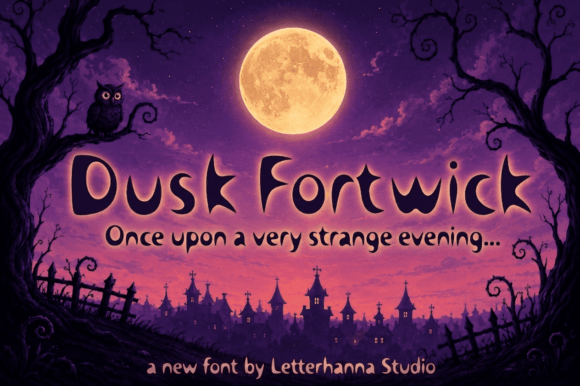
There is a specific moment in design where "safe" stops working. You have laid out the grid, you’ve chosen the color palette, and the copy is sharp, but the typography feels like it’s whispering when it should be shouting. If you have ever found yourself scrolling through endless libraries of geometric sans-serifs looking for something with actual teeth, your search likely ends here. We are looking at Dusk Fortwick, a bold display font that doesn’t just sit on the page—it looms. It is a typeface built on a contradiction: it is rounded and heavy, yet aggressive and fluid, designed for projects that need to leave a mark.
But what exactly makes a font "bite back"? In the case of Dusk Fortwick, the secret lies in the construction of the letterforms themselves. The designers have utilized extreme ink traps carved deep into the structure of the characters. For those unfamiliar with the term, ink traps are traditionally small corners or notches added to the intersections of strokes in a typeface, originally designed to hold excess ink in printing to prevent blotting. However, in modern typography, particularly in display fonts, these traps are exaggerated for stylistic effect.
In Dusk Fortwick, these aren't subtle engineering choices; they are dramatic features. They create deep shadows that give every word a dark, breathing presence. When you set a headline in this typeface, the counters (the enclosed spaces within letters like 'O' or 'D') pulse with a sense of life. The terminals—the ends of the strokes—don’t taper off gently; they end in razor-sharp points. This creates a visual tension that is perfect for designers tired of playing it safe. It walks the line between beautiful and unsettling, making it a powerful tool in your design assets arsenal.
Breaking Down the Aggressive Aesthetic
To understand the value of this premium font, you have to look at how it interacts with light. Because of the extreme ink traps and the heavy weight of the strokes, Dusk Fortwick swallows the light around it. This makes it an exceptional choice for high-contrast environments. Think about a dark mode website interface or a poster with a deep charcoal background. When set in a bright white or neon accent color, the font creates a 3D effect that pops off the screen.
However, it is important to note that this is strictly a display font. It is not designed for body copy or long-form reading. The very features that make it so striking—the sharp points and deep shadows—would create visual fatigue if used for paragraphs of text. This is a typeface for the big moments: the hero section of a homepage, the main title of a movie poster, or the logo of an edgy startup. It commands attention, but it needs space to breathe. If you crowd it, you lose the impact of those fluid curves.
Real-World Applications: Where Does Dusk Fortwick Fit?
The versatility of a font like Dusk Fortwick lies in its personality. It fills a very specific niche that many modern brands are trying to occupy: the intersection of high-end design and counter-culture edge. It isn't a friendly, rounded sans-serif like you might see on a children’s toy box, nor is it a stiff, traditional serif font for a law firm. It is fluid, modern, and unapologetically bold.
Here are some practical scenarios where this typeface can transform a project from generic to unforgettable:
- Streetwear and Fashion Branding: The fashion industry thrives on identity. Whether you are designing a logo for a new skate brand or creating graphics for a limited-run hoodie drop, Dusk Fortwick provides the instant personality required to stand out. Its heavy weight suggests durability, while the sharp terminals add a level of sophistication.
- Horror and Entertainment: If you are working on a Halloween campaign, a horror game title, or a thriller book cover, this font does half the work for you. The "breathing" quality of the ink traps gives it a spooky, organic feel that feels alive.
- Underground Music and Events: From techno festival posters to indie band merchandise, the music scene relies on typography that feels raw. Dusk Fortwick pairs incredibly well with grainy textures and distorted photography, helping to build an atmosphere of intensity.
- Editorial Design: In modern magazine layouts, particularly those covering culture, tech, or art, using a bold display font for drop caps or pull quotes can break up the monotony of standard sans serif fonts. It adds a layer of visual interest that keeps the reader engaged.
Practical Design Strategy: Pairing and Placement
Introducing a font with this much character into your project requires a bit of strategy. Because Dusk Fortwick is so expressive, it acts as the "loud" element in your layout. To maintain visual consistency and readability, you need to pair it with something quiet.
A classic pairing strategy for a heavy, aggressive display font is to contrast it with a clean, geometric sans-serif or a minimalist serif font. If you use another decorative font for your sub-headlines, your design will quickly become chaotic and unreadable. Let Dusk Fortwick own the hierarchy. Use it for the H1 headlines or the main logo lockup, and then step back. Let the supporting typeface handle the dates, times, and descriptions.
Furthermore, consider the medium. This font is optimized for both print and screen, featuring smooth vector curves. This means it will look just as sharp on a massive billboard as it will on a mobile phone screen. However, on smaller screens, be mindful of sizing. If you set it too small on a website, the intricate details of the ink traps might muddy up. Test your layouts at various breakpoints to ensure the typography remains legible and impactful on mobile devices.
Technical Specs and Commercial Utility
For the professional designer or small business owner, the technical capabilities of a font are just as important as its looks. Dusk Fortwick comes equipped with full uppercase and lowercase sets, which is essential for versatility. While all-caps settings are often used for aggressive branding, having the option for lowercase allows for more nuanced typographic hierarchy, especially if you want to soften the tone slightly for specific applications like social media captions.
Additionally, the inclusion of multilingual support is a critical feature for brands operating in a global market. You won't have to switch typefaces if your campaign needs to run in different regions, ensuring your brand identity remains consistent across borders.
When purchasing a commercial font, you are investing in a tool that saves you time and elevates your output. Instead of spending hours trying to warp a standard font to look "edgy" in Illustrator, you start with a foundation that was built for that specific purpose. This allows you to focus on the broader aspects of your marketing assets and campaign strategy, rather than getting bogged down in vector manipulation.
Final Thoughts on Typography That Bites
Design is about communication, and sometimes, communication needs to be visceral. Dusk Fortwick isn't just a collection of vectors; it is a statement piece. It tells your audience that you are confident, bold, and perhaps a little bit dangerous. It is a creative font that bridges the gap between the macabre and the high-fashion, offering a unique tool for logo design, packaging design, and web design.
If your current projects feel safe—perhaps a little too safe—consider swapping out your standard typeface for something with more presence. Set it large, set it bold, and let the ink traps do the talking. When your letters have teeth, your audience won't just read the words; they will feel them.