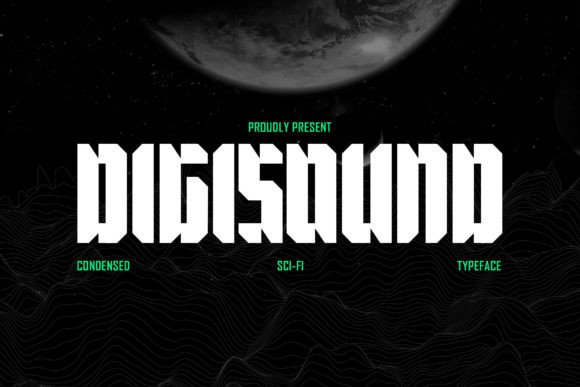
Digisound: The Typeface That Captures a Digital Pulse
Imagine a font that doesn't just sit on the page but vibrates with the energy of a circuit board. That's the immediate impression Digisound makes. It’s a typeface born from the sleek, high-contrast world of digital interfaces and sci-fi aesthetics, but its utility extends far beyond genre-specific projects. For designers, entrepreneurs, and creators, it offers a powerful tool to inject a sense of modernity, precision, and forward momentum into visual communication. It’s less about nostalgic futurism and more about the clean, authoritative presence needed in a tech-driven marketplace.
More Than a Sci-Fi Novelty
While its sharp, condensed letterforms and bold weight are unmistakably futuristic, labeling Digisound as merely a "sci-fi font" undersells its potential. Its true strength lies in its ability to convey clarity, efficiency, and innovation. The tight spacing and geometric construction speak to a world of data, speed, and interconnected systems. This makes it a surprisingly versatile display font for projects that need to communicate complexity without clutter. Think of the clean typography in a fintech app, the bold headlines of a tech blog, or the confident branding of a cybersecurity firm. Digisound provides that specific flavor of modern professionalism.
Practical Applications Across Industries
Where does a typeface like Digisound truly shine? Its applications are as varied as the digital landscape itself.
For Branding & Logo Design: A logo design set in Digisound immediately signals that a company is contemporary and tech-savvy. It’s particularly effective for startups in SaaS, AI, gaming hardware, or digital entertainment. The font’s inherent boldness ensures the brand name is memorable and impactful, even at smaller sizes on a business card or website favicon.
In Digital & Print Marketing: The font excels as a headline hero. Use it for social media graphics to stop the scroll with a striking announcement. It creates powerful, readable titles for YouTube thumbnails, podcast covers, and webinar promotions. For print materials like event posters, especially for tech conferences, product launches, or music festivals, Digisound commands attention. Its condensed nature also allows for longer, impactful headlines in limited space, a practical advantage for packaging design for electronics or premium tech accessories.
Enhancing Editorial & Web Layouts: In editorial design, a magazine spread about future trends or a book cover for a thriller novel gains instant visual credibility. On the web, it can be a game-changer for hero sections, section headers, and call-to-action buttons, guiding the user’s eye with decisive, readable authority. Paired with a clean sans serif font for body text, it creates a balanced and engaging typographic hierarchy.
Building a Cohesive Visual Language
Consistency is the bedrock of strong brand identity. Adopting Digisound as a core element of your brand identity toolkit ensures a unified look across every touchpoint. From the title slide of a investor pitch deck to the header of an email newsletter, the consistent use of its bold, condensed style builds recognition. This isn't about using the same font everywhere, but about having a signature style that audiences begin to associate with your message. It becomes a visual shorthand for your brand's innovative spirit.
Key Considerations for Effective Use
Integrating a strong display typeface like Digisound requires a thoughtful approach to maximize its impact and maintain readability.
- Font Pairing is Crucial: Digisound is a statement piece. It pairs best with neutral, highly legible companions. A simple geometric sans serif font for body copy creates a clean, modern look. For a touch of contrast, a humanist sans serif can soften the tech edge. Avoid pairing it with other highly decorative fonts, which can create visual chaos.
- Context is King: Consider your audience. While perfect for a gaming convention, it might feel out of place on a traditional law firm's website. Match the font's personality to your project's goals and your audience's expectations.
- Test Readability: Always test your chosen font style in context. Check how headlines render on mobile devices. Ensure that any text set in Digisound—especially at larger sizes for posters or banners—is legible from a distance. Its condensed form can be dense, so adequate letter-spacing (tracking) might be needed for all-caps settings.
- Explore the Included Styles: A quality premium font family often includes more than just the base weight. Check if Digisound comes with additional styles like a regular, light, or even a italic variant. These can provide valuable flexibility for creating nuanced typographic systems without introducing a new typeface.
- Understand the License: For any commercial font, carefully review the licensing terms. Ensure it covers your intended use, whether for a client's logo design, merchandise you plan to sell, or digital products like templates. Proper licensing protects you and respects the creator's work.
Ultimately, Digisound is more than just a collection of glyphs; it's a design asset with a distinct point of view. It’s for the creator who wants their work to feel decisive, intelligent, and connected to the rhythm of contemporary life. By using it strategically—as a powerful headline font, a branding cornerstone, or a accent for key elements—you can harness its energy to make your projects not just look modern, but feel unmistakably relevant. The key is to let its bold character speak clearly, without overwhelming the conversation. When balanced with thoughtful design choices, it becomes a reliable tool for cutting through the noise and making a lasting visual impression.